There are destinations you visit, photograph and eventually move on from. Then there are places like Masai Mara—places that stay in your mind long after the journey ends.
Located in southwestern Kenya, the Masai Mara National Reserve is known for its sweeping grasslands, scattered acacia trees and extraordinary wildlife. It is one of Africa’s most celebrated safari destinations, yet photographs rarely capture the true scale or emotion of being there.
The first sight of a giraffe walking across an open plain, a pride of lions resting in the grass or elephants moving quietly against the horizon makes you realise that Masai Mara is not simply another tourist attraction. It is an opportunity to experience nature in its most powerful and unscripted form.
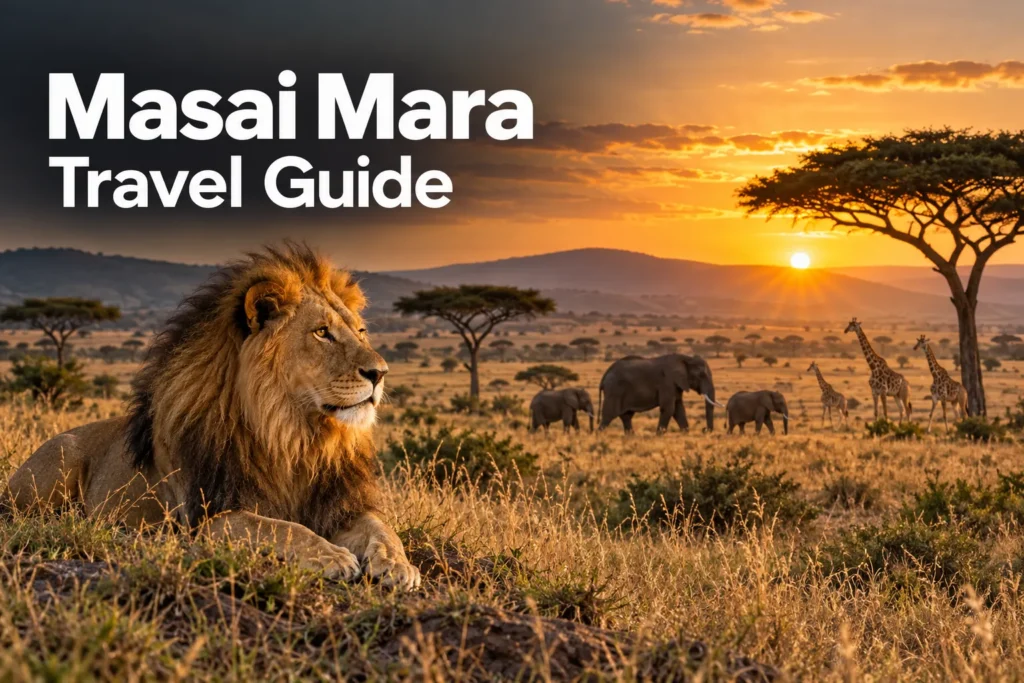
Masai Mara forms part of the wider Mara–Serengeti ecosystem, which extends across the border between Kenya and Tanzania. While the reserve is famous for the Great Migration, wildlife can be seen throughout the year.
The landscape changes with the seasons. At times, the plains appear lush and green; at others, they take on beautiful shades of gold. Every season brings its own atmosphere, photography opportunities and animal encounters.
No two game drives are ever the same. You may begin the morning expecting to see elephants and instead find cheetahs scanning the grassland. A quiet afternoon drive can suddenly become thrilling when your guide spots a leopard hidden in a tree.
That unpredictability is part of the magic.
The term “Big Five” refers to the lion, leopard, elephant, buffalo and rhinoceros. Masai Mara is one of the world’s best-known regions for observing several of these animals in their natural habitat.
Lions are among the reserve’s most iconic residents. They may be seen resting in the shade, walking through the grass or watching over their cubs. Elephants move through the landscape in family groups, while large herds of buffalo often gather near water and open plains.
Leopards and rhinoceroses are more difficult to find, making every sighting especially rewarding. Cheetahs, giraffes, zebras, hippos, crocodiles, hyenas, wildebeest, topi and different species of antelope add remarkable variety to the safari experience.
Wildlife sightings can never be guaranteed. However, travelling with an experienced driver-guide considerably improves the experience because guides understand animal behaviour, tracks, habitats and the rhythm of the reserve.
The Great Migration is the event that places Masai Mara on the bucket lists of travellers from around the world.
Every year, enormous herds of wildebeest, zebras and other grazing animals move through the Serengeti–Mara ecosystem in search of fresh grass and water. Their movement is influenced by rainfall and natural conditions rather than a fixed calendar.
The dramatic Mara River crossings generally attract the greatest attention. Herds gather near the riverbanks before attempting to cross waters inhabited by crocodiles. It is an intense and emotional display of survival in the wild.
The migration is often associated with the period from July to October in Masai Mara, but exact timings vary each year. Travellers planning specifically for river crossings should remain flexible and understand that nature does not follow a guaranteed schedule.
A minimum stay of three nights is recommended.
Although two nights may appear sufficient on paper, road transfers and check-in timings can significantly reduce the time available for safaris. Three nights provide at least two meaningful days for wildlife viewing and allow you to explore without constantly watching the clock.
Travellers with more time can spend four or five nights in different sections of the ecosystem. This slower approach offers more opportunities for photography, relaxed game drives and less-rushed wildlife encounters.
Masai Mara can also be combined with Nairobi, Lake Naivasha, Lake Nakuru, Amboseli National Park or Ol Pejeta Conservancy for a more complete Kenya itinerary.
Early mornings are among the best times for game drives. Temperatures are cooler, the light is ideal for photography and predators may still be active after the night.
Evening drives are equally beautiful. As the heat begins to soften, animals become more active and the savannah turns golden under the setting sun.
Travellers usually choose between three formats:
This option allows you to return to your lodge or camp for lunch and rest during the warmer part of the day. It is well suited to families, senior travellers and anyone who wants to enjoy the property between safaris.
A full-day drive provides more time to explore distant areas of the reserve. Breakfast and lunch may be packed by the accommodation, depending on the programme. This option is ideal for serious wildlife enthusiasts and photographers.
A shorter drive works well for travellers who want to balance wildlife viewing with relaxation. However, the area covered will naturally be more limited.
Always follow your guide’s instructions. Visitors should never leave the safari vehicle unless the guide confirms that it is safe and permitted.
Accommodation ranges from comfortable safari camps to exclusive luxury lodges.
Properties located inside the reserve or nearby conservancies can provide excellent access to wildlife areas. Some camps use canvas tents with comfortable beds, private bathrooms and decks facing the savannah. Luxury lodges may offer swimming pools, fine dining, private game drives and additional wilderness experiences.
Location is just as important as price. Before booking, consider:
Some safari properties are unfenced, allowing wildlife to move through the surrounding area. Guests must follow all safety instructions and may need an escort while walking around the property after dark.
A hot-air balloon safari offers a completely different perspective of Masai Mara.
The experience generally begins before sunrise. As the balloon rises, the open plains, rivers, forests and wildlife trails gradually become visible below. Seeing animals move across the landscape from above can be one of the most memorable moments of a Kenya holiday.
Balloon safaris are relatively expensive and should be booked in advance during busy travel periods. Operations also depend on weather and safety conditions.
For honeymooners, photographers and travellers celebrating a special occasion, it can be a worthwhile addition to the itinerary.
The reserve takes its name from the Maasai people, whose communities have lived in the region for generations.
A respectful cultural visit can offer insight into traditional homes, clothing, music, crafts and community life. Choose experiences organised responsibly and ensure that the community benefits directly from the visit.
Handmade beadwork and jewellery are popular local purchases. Buying directly from community artisans can support local livelihoods, but travellers should remain courteous while negotiating prices.
Masai Mara offers wildlife viewing throughout the year.
July to October is the most popular period because of the Great Migration. It is also one of the busiest and most expensive seasons.
January and February generally offer warm, comparatively dry conditions and good wildlife viewing. The greener months bring beautiful landscapes, migratory birds and fewer visitors, although rain can make some roads challenging.
The best time ultimately depends on your priorities:
Pack light, comfortable and practical clothing in neutral colours. Bright white garments show dust easily, while very dark colours can become uncomfortable in strong sunlight.
Useful items include:
Avoid approaching, feeding or attempting to attract wildlife for photographs. The animals’ space and safety should always come before the perfect picture.
Travellers should check Kenya’s current entry rules before confirming their journey. Kenya operates an Electronic Travel Authorisation system, and eligible visitors can complete the application online before travelling through the official Kenya eTA portal.
Requirements, charges and processing periods may change. Travellers should use only the official portal or seek assistance from a trusted travel professional.
A passport with adequate validity, confirmed accommodation, return or onward travel details, travel insurance and health-related documents may be required depending on the prevailing regulations.
Masai Mara is more than a place to tick animals off a checklist.
It is the silence before sunrise, the sound of a safari vehicle crossing an open plain, the excitement of spotting movement in the distance and the feeling of watching wildlife exist entirely on its own terms.
You do not have to be a wildlife expert to fall in love with the Mara. The scale of its landscape and the honesty of nature make it unforgettable for almost every kind of traveller.
It is wild, beautiful and unpredictable—and that is exactly why the journey feels so special.
Travelicious Journeys can help you organise international flights, Kenya eTA assistance, safari accommodation, private transfers, game drives and customised itineraries.
Whether you are planning a family safari, honeymoon, group tour or once-in-a-lifetime African adventure, we can create a Kenya itinerary suited to your preferred travel dates, comfort level and budget.
Travelicious Journeys
Contact: +91 9090 99 6663
Website: www.traveliciousjourneys.in
+91 9090 99 6663
+91 9090 00 6663
traveliciousjourneys@gmail.com
operations@traveliciousjourneys.in
Office No. 105, First Floor, Hill Crest, Jarvari Rd, Pimple Saudagar, Pune, Pimpri-Chinchwad, Maharashtra 411027
Mon - Sat: 10:00 AM - 07:00 PM
Sun: Closed