🌊 What Is The Naneghat Reverse Waterfall?
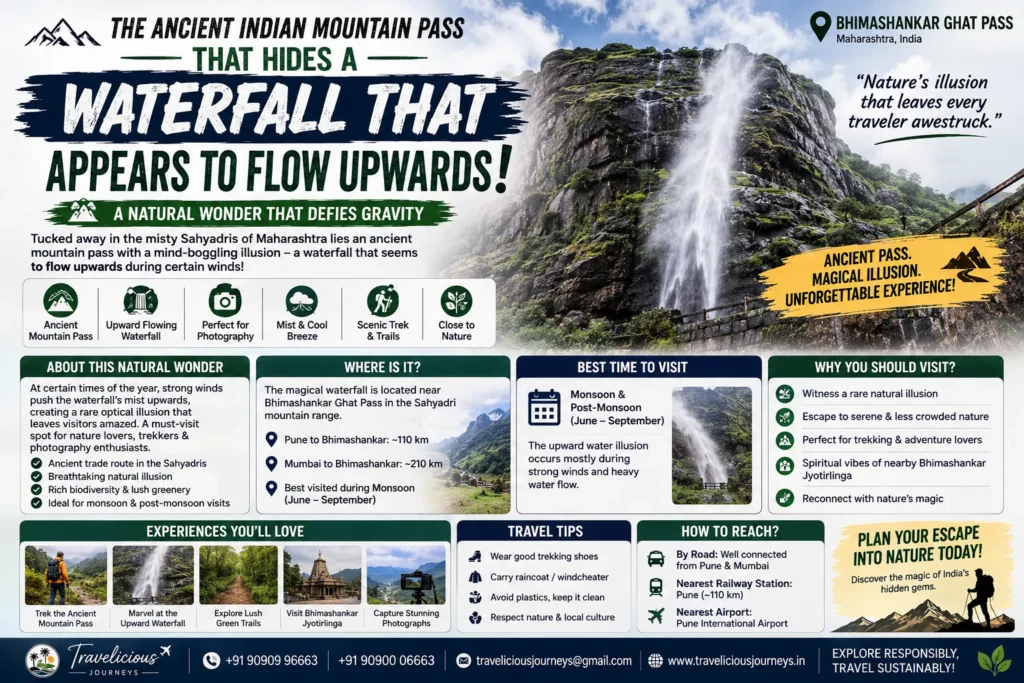
The reverse waterfall isn’t actually flowing uphill. It is a natural optical effect created by the combination of falling water and powerful mountain winds.
During heavy rain, water flows over the rocky slopes. Strong winds moving through the mountain pass can hit the falling water with enough force to push it upwards and break it into fine droplets.
From a distance, this creates the remarkable impression that the waterfall is rising towards the sky. Gravity continues to pull the water downward; the wind simply redirects much of the falling water before it reaches the ground.
📍 Where Is Naneghat?
Naneghat is located near Junnar in Maharashtra’s Pune district, in the Western Ghats.
The pass sits amid rugged hills, valleys and rocky terrain, making it a popular destination for trekkers, photographers and travellers looking for unusual natural experiences.
During the rainy season, the landscape becomes particularly dramatic, with lush greenery, mist-covered hills and seasonal waterfalls adding to the scenery.
🏺 Naneghat Is More Than A Waterfall
One of the most fascinating aspects of Naneghat is its history.
The mountain pass is believed to be more than 2,000 years old and once served as an important trade route connecting the Konkan coast with the Deccan Plateau.
Naneghat is associated with the Satavahana period, and ancient rock-cut caves and inscriptions found in the area provide evidence of its historical importance.
This makes a trip to Naneghat a combination of nature, trekking and history, rather than simply a waterfall excursion.
🌿 Why Visit Naneghat?
1. Witness A Rare Natural Phenomenon
The reverse waterfall is the biggest attraction. Seeing water apparently move against gravity makes for a memorable experience and striking photographs.
2. Experience The Western Ghats
The surrounding landscape transforms dramatically during the rainy season, with green hills, clouds and seasonal streams creating a spectacular setting.
3. Explore Ancient History
The old trade route, caves and inscriptions offer a glimpse into Maharashtra’s ancient past.
4. A Favourite For Photographers
The combination of mist, cliffs, greenery and airborne water spray creates excellent opportunities for landscape photography.
5. Trekking Adventure
Naneghat’s rocky terrain and trails make it appealing to outdoor enthusiasts, although conditions can become challenging during heavy rainfall.
🌧️ When Can You See The Reverse Waterfall?
The phenomenon is weather-dependent and cannot be guaranteed on every visit.
It is most commonly observed during peak monsoon conditions, particularly when heavy rain is accompanied by strong winds.
For travellers hoping to witness the effect, checking local weather conditions before leaving is essential.
🥾 Things To Keep In Mind Before Visiting
Naneghat can become slippery and difficult to navigate during periods of heavy rain.
Keep these precautions in mind:
- Wear proper trekking or hiking shoes.
- Avoid slippery rocks and unstable surfaces.
- Stay away from cliff edges.
- Follow local instructions and safety barriers.
- Check weather conditions before starting the trek.
- Carry rain protection and waterproof bags for electronics.
- Avoid attempting difficult sections during extreme weather.
The reverse waterfall is fascinating, but safety should always come first.
📸 A Unique Weekend Experience From Maharashtra
For travellers searching for something beyond conventional hill stations and waterfalls, Naneghat offers an unusual combination: an ancient trade route, Western Ghats scenery and a weather-driven natural phenomenon that appears to challenge gravity.
The reverse waterfall may last only under the right combination of rain and wind, which makes the experience particularly unpredictable—and memorable.