Some places impress you with a single landmark. Switzerland wins you over repeatedly.
It happens when your train curves beside a turquoise lake, when the clouds suddenly reveal a snow-covered mountain, and when an ordinary walk through a quiet village feels like a scene from a beautifully filmed travel story.
For first-time visitors, Switzerland can also feel overwhelming. Should you stay in Lucerne or Interlaken? Is Jungfraujoch worth the expense? Do you need the Swiss Travel Pass? How many destinations can realistically fit into one holiday?
The secret is not to see everything. It is to choose a balanced route that allows you to experience Switzerland’s lakes, villages, scenic trains and legendary Alpine landscapes without spending your entire holiday checking in and out of hotels.
This guide will help you plan that journey.
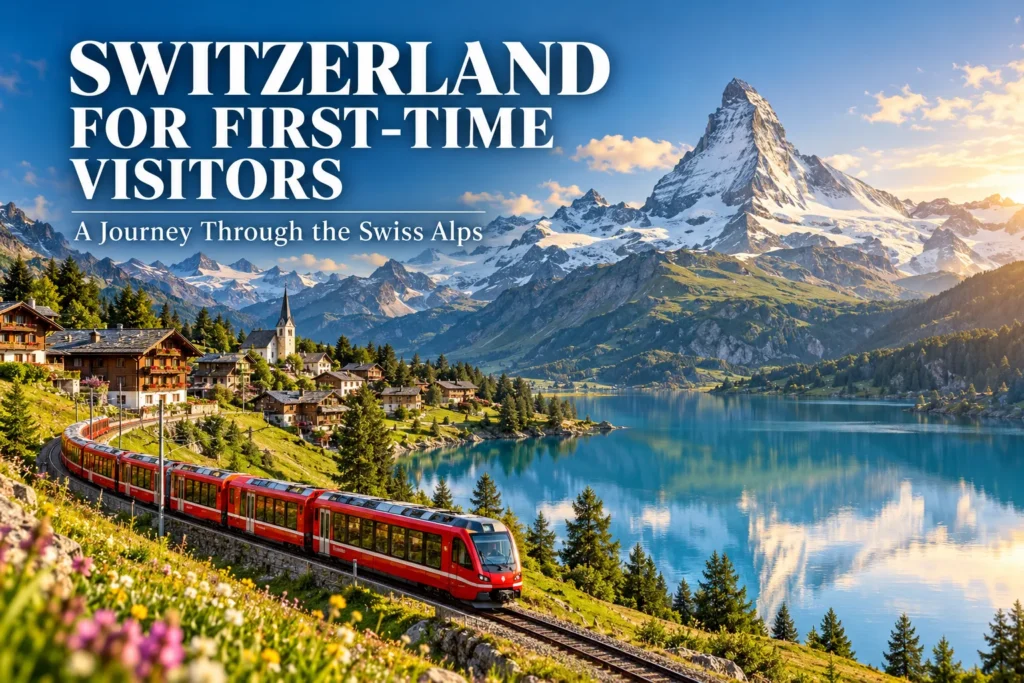
The Swiss Alps are not only about high mountains. The real beauty lies in how naturally different experiences come together.
In one journey, you can:
Cruise across a peaceful lake
Travel through mountain passes by train
Walk through car-free Alpine villages
See glaciers and snow-covered summits
Ride cable cars above green valleys
Explore historic old towns
Taste traditional cheese, chocolate and fondue
Wake up to views of the Matterhorn
Switzerland’s transport system makes these experiences remarkably accessible. Trains, buses, boats, mountain railways and cable cars connect cities with even the smallest resort villages.
For a first visit, public transport is usually more relaxing than renting a car—especially when the journey itself is one of the main attractions.
Many international travellers begin in Zurich. Although it is sometimes treated only as an arrival point, the city deserves at least a few hours.
Walk through the lanes of the Old Town, visit the Bahnhofstrasse shopping district and relax beside Lake Zurich. The city is polished and modern, but its historic churches, riverfront and neighbourhood cafés prevent it from feeling purely commercial.
One night is generally enough for a first-time itinerary unless you enjoy museums, shopping or urban exploration.
Lucerne provides one of the finest introductions to Switzerland.
Its compact old town, painted buildings, wooden Chapel Bridge and position beside Lake Lucerne create a setting that feels distinctly Swiss from the moment you arrive.
Lucerne also serves as a convenient base for mountain excursions. Popular options include Mount Pilatus, Mount Rigi and Stanserhorn. On a clear day, combining a mountain railway or cable car with a boat journey across the lake can become one of the most memorable days of your holiday.
Switzerland Tourism describes Lucerne as a gateway to Central Switzerland, with its lake and impressive Alpine panorama.
Allow at least two nights if you plan to include a mountain excursion.
Interlaken lies between Lake Thun and Lake Brienz, surrounded by the mountains of the Bernese Oberland.
The town is lively and convenient, with excellent connections to Grindelwald, Lauterbrunnen, Wengen and the Jungfraujoch. It is also known for adventure activities such as paragliding, canyoning and skydiving.
Interlaken itself is best understood as a base. The most dramatic Alpine experiences are found in the villages and valleys surrounding it. Its location between two lakes and its year-round connections to mountain destinations make it particularly useful for first-time visitors.
Stay for at least three nights, preferably four if you want to explore without rushing.
Lauterbrunnen is the Switzerland many travellers imagine before they arrive.
The village sits within a deep valley framed by steep cliffs, Alpine meadows and numerous waterfalls. Staubbach Falls drops dramatically near the village, while trains and cable cars connect the valley to surrounding mountain communities.
Take time to walk rather than simply stopping for photographs. The quieter paths beyond the railway station reveal farmhouses, grazing cattle and the scale of the valley far better than the busy central viewpoint.
Lauterbrunnen can be visited from Interlaken, but staying overnight gives you peaceful mornings and evenings after many day visitors have left.
Grindelwald combines spectacular mountain scenery with plenty of outdoor experiences.
The village sits below the imposing Eiger and provides access to Grindelwald-First, Kleine Scheidegg and the Jungfraujoch route. In summer, visitors come for hiking, mountain carts and cliff walks. Winter transforms the area into a major skiing and snow-sports destination.
Grindelwald can become busy, but the scenery justifies its popularity. If possible, begin mountain excursions early and reserve sufficient time for weather changes.
Jungfraujoch is one of Switzerland’s most famous—and expensive—mountain excursions.
The journey takes visitors high into the Alps, where viewpoints overlook glaciers and dramatic snow-covered peaks. The attraction includes indoor exhibitions and outdoor areas, though accessibility can depend on weather.
Do not book solely because Jungfraujoch appears on every standard itinerary. Check the forecast and live webcams first. On a heavily overcast day, you may spend considerably more for very limited views.
Official Jungfrau guidance recommends a paid seat reservation, particularly in good weather when visitor numbers are high. Reservation rules may vary by season, so check the current conditions before travelling.
Travellers who prefer a less expensive mountain experience can consider Schilthorn, Grindelwald-First, Mount Rigi or Gornergrat, depending on their route.
Few mountains are as instantly recognisable as the Matterhorn.
Zermatt is a car-free resort village in southern Switzerland and one of the highlights of a first Alpine journey. Electric vehicles operate within the village, but most visitors explore it comfortably on foot.
For classic Matterhorn views, take the cogwheel railway to Gornergrat. The journey climbs through forests and Alpine terrain before reaching a panoramic viewpoint surrounded by high peaks and glaciers.
Another option is Matterhorn Glacier Paradise, reached by a series of cable cars. Choose between the two experiences based on weather, operating schedules, cost and the type of view you prefer.
Spend at least two nights in Zermatt. The Matterhorn is sometimes hidden behind clouds, and an extra morning gives you another opportunity to see it clearly.
Montreux offers a softer side of Switzerland.
Its lakeside promenade, mountain views and Mediterranean-style vegetation create a noticeably different atmosphere from the high Alpine villages. Nearby Chillon Castle stands beside Lake Geneva and is among the country’s most photographed historic sites.
The terraced vineyards of Lavaux, accessible between Montreux and Lausanne, make another rewarding excursion.
Montreux fits especially well into an itinerary connecting Interlaken with Zermatt.
St. Moritz is associated with luxury, winter sports and dramatic scenery. It is also a gateway to the Engadin Valley and one end of the Glacier Express and Bernina Express routes.
First-time visitors with only seven or eight days may find it difficult to include St. Moritz without rushing. It works better on a longer itinerary or a second journey focused on eastern Switzerland.
In Switzerland, a travel day does not have to feel like lost time.
This route connects two of the most useful destinations for first-time visitors. It passes lakes, meadows and mountain scenery and is easy to incorporate into a classic itinerary.
The GoldenPass journey links Central Switzerland with the Lake Geneva region through scenic landscapes and resort towns.
Its most popular sections can be incorporated into a journey between Interlaken and Montreux. Check whether a seat reservation is required or recommended for the specific service you choose.
The Glacier Express connects Zermatt and St. Moritz through the Swiss Alps.
Despite its name, it is deliberately slow, allowing passengers to appreciate mountain passes, valleys, bridges and gorges. It is a full-day experience and requires advance seat reservations with an additional reservation charge.
It is best suited to travellers who genuinely enjoy long scenic journeys. If your holiday is short, travelling only part of the route or choosing a faster connection may be more practical.
The Bernina route travels through the eastern Swiss Alps towards Tirano in Italy. It is famous for high mountain scenery, glaciers and the curved Landwasser-style landscapes associated with the Rhaetian Railway region.
Like the Glacier Express, it fits most comfortably into a longer Switzerland itinerary.
Switzerland Tourism’s Grand Train Tour brings several of the country’s panoramic rail experiences together, including routes associated with the Glacier Express and the Lucerne–Interlaken journey.
Travel directly to Lucerne if your arrival time allows. Explore the Old Town, Chapel Bridge and lakeside promenade.
Overnight: Lucerne
Choose Mount Pilatus, Mount Rigi or Stanserhorn based on the season and weather. Combine your excursion with a boat ride if operating schedules permit.
Overnight: Lucerne
Take the scenic Lucerne–Interlaken Express. After arrival, explore Interlaken or continue to the lakeside villages around Lake Thun or Lake Brienz.
Overnight: Interlaken
Visit Lauterbrunnen Valley and choose one of its car-free mountain villages. Wengen provides beautiful views over the valley, while Mürren offers a more secluded Alpine atmosphere.
Avoid trying to visit every village on the same day. Allow time to walk and enjoy the scenery.
Overnight: Interlaken
Select your experience after checking the weather.
Visit Jungfraujoch for snow and glacier views, or spend the day around Grindelwald-First for mountain activities and hiking. Travellers seeking a slower day can explore Grindelwald village and Kleine Scheidegg.
Overnight: Interlaken
Travel to Zermatt and settle into the car-free village. Walk through the old quarter and look for your first clear view of the Matterhorn.
Overnight: Zermatt
Take the cogwheel train to Gornergrat. If the weather is favourable, spend time at intermediate stations or follow one of the marked walking routes appropriate to the season.
Overnight: Zermatt
Depart for your onward flight. If your flight leaves early, spend the previous night closer to the airport rather than relying on a long same-day journey.
With ten days, add Montreux and Lake Geneva. With twelve to fourteen days, consider St. Moritz, the Glacier Express or the Bernina route.
There is no single perfect month because each season creates a different holiday.
Spring brings fresh green landscapes, waterfalls and fewer visitors in some areas. However, higher hiking trails may remain snow-covered, and certain mountain facilities can close temporarily for maintenance between winter and summer seasons.
Always check operating calendars before finalising a spring itinerary.
Summer is ideal for hiking, lake cruises, outdoor activities and high-mountain excursions.
Days are longer, but July and August are also busy. Popular hotels, scenic trains and mountain experiences should be booked in advance.
Early autumn can be particularly beautiful. Conditions are often suitable for walking, and the busiest summer crowds begin to ease.
As the season progresses, some mountain transport and attractions reduce operations. Confirm schedules before booking an October journey.
Winter is perfect for snow-covered villages, skiing, Christmas markets and classic Alpine scenery.
Non-skiers can still enjoy scenic railways, cable cars, sledging and winter walks. Daylight hours are shorter, however, and weather can affect mountain visibility.
Switzerland Tourism’s suggested winter rail journey includes Lucerne, Interlaken, Zermatt and St. Moritz, showing how well these regions can be combined during the colder season.
Transport is one of the largest expenses in Switzerland, so choosing the correct pass matters.
A Swiss Travel Pass is generally convenient for travellers making frequent journeys over consecutive days.
Depending on the pass and route, it can cover trains, buses, boats, city transport and selected panoramic services. It also provides museum admission and discounts on many mountain railways. Premium panoramic trains may still require separate seat reservations or supplements.
Its greatest benefit is simplicity—you can travel without purchasing a separate standard ticket for every included journey.
The Swiss Half Fare Card is designed for international visitors and is valid for one month. It provides up to 50% off eligible journeys by train, bus and boat, as well as reduced fares on many mountain railways and cable cars.
As of the currently published information, the card costs CHF 150, although prices and conditions can change. It must be carried with a valid original passport or official identity document.
It can be more economical when you plan fewer long-distance journeys but several expensive mountain excursions.
Write down your exact route and compare:
Individual point-to-point fares
Mountain excursion prices
Swiss Travel Pass cost
Swiss Half Fare Card plus discounted tickets
Seat reservation charges
Local guest-card benefits offered by hotels
Do not purchase a pass simply because it is popular. The right choice depends on your itinerary.
Swiss cuisine is warm, filling and ideal after a day in the mountains.
Try:
Cheese fondue
Raclette
Rösti
Zürcher Geschnetzeltes
Älplermagronen, an Alpine macaroni dish
Swiss chocolate
Bircher muesli
Fresh bread and regional cheeses
Eating at restaurants can be expensive. To control costs, combine special dining experiences with supermarket meals, bakery breakfasts or picnic lunches.
Tap water is generally drinkable unless a fountain is specifically marked otherwise. Carry a reusable bottle.
Switzerland is expensive, but a well-planned trip does not have to feel wasteful.
Book hotels near railway stations to reduce local transfers.
Stay longer in fewer bases.
Compare transport passes against your exact itinerary.
Reserve long-distance tickets and accommodation early.
Choose apartments or hotels that include breakfast.
Buy picnic supplies from supermarkets.
Carry snacks for mountain excursions.
Check the weather before buying costly same-day mountain tickets.
Avoid changing hotels every night.
Use free walking trails and lakeside promenades.
Saving money should not mean removing every special experience. Choose two or three priorities—perhaps Jungfraujoch, Gornergrat and a panoramic train—and organise the rest of your budget around them.
Mountain weather can change quickly, even in summer.
Pack:
Layered clothing
A waterproof and wind-resistant jacket
Comfortable shoes with reliable grip
Sunglasses and sunscreen
A warm cap or beanie for high-altitude excursions
A small umbrella
A reusable water bottle
A compact daypack
A universal travel adapter
Essential medicines
Travel insurance documents
Do not assume that sunny weather in Interlaken means warm conditions at Jungfraujoch. Temperatures at high altitude can be dramatically lower.
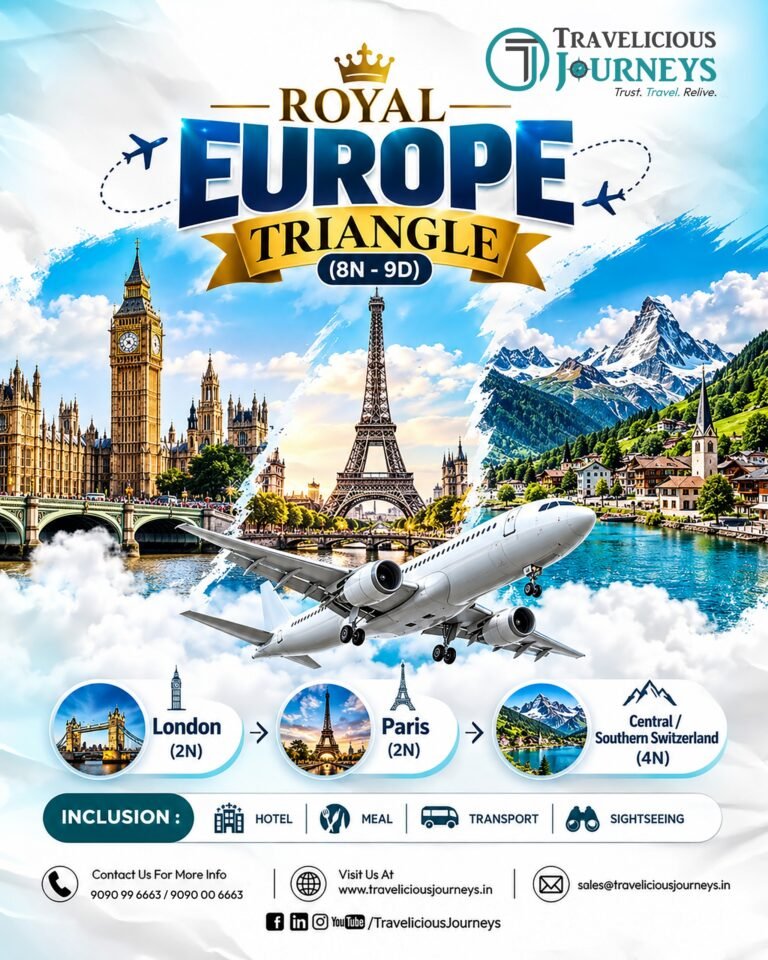
Zurich, Lucerne, Interlaken, Zermatt, Montreux, Geneva and St. Moritz may look close on a map, but including all of them in one short trip creates unnecessary travel.
Clouds can hide the very view you are paying to see. Keep at least one day flexible where possible.
Two or three nights provide protection against poor weather and allow you to experience the destination after day visitors leave.
Mountain railways, cable cars, premium trains and seat reservations can have separate charges. Always check the precise validity.
Swiss railway stations are efficient, but changing trains with large bags can still become exhausting. Pack light enough to manage your luggage independently.
Cable cars, hiking routes and mountain hotels may close between their summer and winter operating periods.
Your first journey through Switzerland should not feel like a race between famous attractions.
Let the train ride become part of the holiday. Sit beside the lake without checking the time. Walk beyond the busiest viewpoint. Give the Matterhorn a second morning to emerge from the clouds.
Switzerland’s beauty is not limited to dramatic summits. It is also present in the quiet details—the sound of cowbells across a meadow, the reflection of mountains in a lake and the moment a small red train appears against a landscape that hardly seems real.
Plan carefully, travel slowly and leave a little space for the Alps to surprise you.
Whether you want a romantic Alpine escape, a family holiday, a scenic rail journey or a customised Switzerland itinerary, Travelicious Journeys can help arrange your flights, hotels, transport passes, sightseeing and visa assistance.
Call or WhatsApp: +91 9090 99 6663 | 9090 00 6663
Website: www.traveliciousjourneys.in
Travelicious Journeys — Trust. Travel. Relive.
+91 9090 99 6663
+91 9090 00 6663
traveliciousjourneys@gmail.com
operations@traveliciousjourneys.in
Office No. 105, First Floor, Hill Crest, Jarvari Rd, Pimple Saudagar, Pune, Pimpri-Chinchwad, Maharashtra 411027
Mon - Sat: 10:00 AM - 07:00 PM
Sun: Closed