There are music festivals where the stage is the main attraction, and then there is Ziro—a festival where the destination becomes an equally important part of the experience.
Held in the peaceful Ziro Valley of Arunachal Pradesh, Ziro Festival brings independent musicians, artists and travellers together in one of Northeast India’s most beautiful natural settings. The surrounding rice fields, misty hills, bamboo structures and relaxed atmosphere make it feel completely different from a conventional city-based concert.
For travellers who enjoy music but also want to experience local culture, nature and slower living, Ziro Festival 2026 offers a memorable reason to explore Arunachal Pradesh.
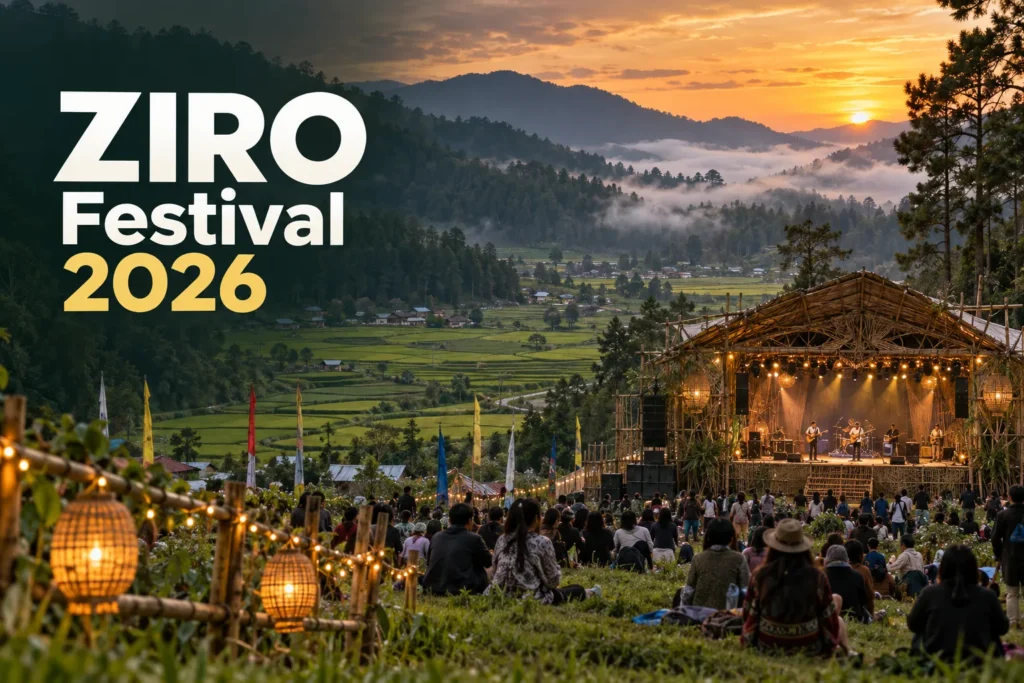
Ziro Festival 2026 will be held from:
24 to 27 September 2026
The four-day outdoor festival takes place in Ziro Valley, located in the Lower Subansiri district of Arunachal Pradesh.
Ziro Festival was founded in 2012 and has since developed into one of India’s best-known independent music festivals. It features Indian and international performers while promoting local artists, indigenous communities and environmentally responsible event practices.
The organisers construct much of the festival infrastructure using locally sourced materials such as bamboo. Local artisans, youth groups and community members also play an important role in hosting and producing the event.
Ziro Festival is not built around a single headline performer. Its real appeal lies in the complete experience.
Visitors spend their days discovering new music, meeting travellers from different parts of the country, exploring nearby villages and enjoying the landscape. Evenings bring live performances under an open sky, surrounded by fields and distant hills.
The festival is especially popular among travellers who appreciate:
The atmosphere is generally relaxed and intimate, allowing visitors to feel more connected to the musicians, destination and local community.
Reaching Ziro requires some planning, but the journey through Arunachal Pradesh is part of the experience.
The closest practical airports may include:
Flight availability varies by city and travel date.
Donyi Polo Airport is convenient for travellers entering through Itanagar, while Lilabari can provide another route towards Ziro. Guwahati offers the widest selection of flights but requires a considerably longer onward road or rail journey.
Travellers arriving at Guwahati can continue towards Naharlagun or North Lakhimpur before taking a road transfer to Ziro.
Naharlagun is one of the most commonly used railway stations for reaching Ziro. Trains connect it with Guwahati and selected cities in other parts of India.
From Naharlagun, travellers can continue to Ziro by a reserved taxi, shared vehicle or pre-arranged festival transfer.
North Lakhimpur railway station may also be considered depending on train availability and the chosen road route.
Rail tickets for the festival period should be reserved early because demand is likely to be high.
Ziro is connected by road with Itanagar, Naharlagun and North Lakhimpur.
Travel time can vary significantly because of weather, road conditions and festival traffic. Mountain roads may be winding, so visitors prone to motion sickness should carry suitable medication after consulting a healthcare professional.
Pre-booked transfers are preferable, particularly for travellers reaching after daylight hours. When sharing transport, confirm the pickup location, departure time, luggage allowance and final drop point.
Indian citizens who are not residents of Arunachal Pradesh generally require an Inner Line Permit, commonly called an ILP, to enter the state.
The permit should be arranged before the journey through the official Arunachal Pradesh ILP system or authorised offices.
Travellers may need to provide:
Festival tickets and ILPs are separate requirements. Holding a festival pass does not automatically provide permission to enter Arunachal Pradesh.
Foreign nationals should confirm the applicable Protected Area Permit or other entry requirements before planning their visit. Permit regulations can change, so all visitors should verify the latest instructions through official government channels.
Accommodation becomes limited during the festival, making advance booking essential.
Camping is one of the most popular ways to experience Ziro Festival. Several operators establish temporary camps near the venue, offering combinations of tents, mattresses, blankets, washrooms, meals and transfers.
Before booking, check:
Ziro can feel cold and damp at night, so comfort depends greatly on the quality of the campsite and the equipment provided.
Homestays allow travellers to interact more closely with local families and experience everyday life in Ziro Valley.
Facilities may be simpler than conventional hotels, but the warmth of the hospitality often becomes one of the most memorable parts of the journey. Homestays are limited and should be booked well in advance.
Ziro and Hapoli have a selection of hotels, lodges and guesthouses. These may suit families, senior travellers and visitors who prefer private rooms and attached bathrooms.
Properties closer to the festival venue usually sell out quickly. If your accommodation is farther away, arrange reliable daily transport in advance.
Ziro’s weather can be unpredictable in September. Days may feel pleasant, but evenings can become cool, and rain is always possible.
Carry practical clothing and footwear rather than planning only for photographs.
Recommended items include:
Avoid bringing unnecessary plastic items. Ziro Festival places strong emphasis on sustainability, and visitors are expected to respect the venue’s environmental guidelines.
Food is an important part of the Ziro experience.
Visitors can try local Arunachali preparations along with rice dishes, smoked meats, bamboo-shoot recipes, momos, noodles and other regional favourites. Vegetarian choices are generally available, although the variety may differ between stalls.
Traditional rice-based beverages may also be available. Visitors should consume responsibly and follow all festival regulations.
Carry some cash because digital payments can occasionally be affected by network connectivity.
Do not limit the trip to the festival grounds. Keep at least one additional day for exploring Ziro Valley.
The Apatani community is central to Ziro’s cultural identity. A responsible village visit offers insight into local homes, customs, agriculture and community life.
Always ask permission before photographing residents or entering private spaces.
The carefully managed wet-rice cultivation landscape is one of Ziro’s most recognisable sights. Walking through the valley during the morning offers beautiful views and excellent photography opportunities.
Nature lovers can explore the forested landscapes around Talley Valley. Access and trekking arrangements should be confirmed locally, particularly during wet weather.
Kile Pakho is a popular viewpoint offering expansive views of the Ziro plateau and surrounding hills.
This hilltop temple combines spiritual importance with scenic surroundings. Visitors should check road and weather conditions before travelling.
Reach Ziro, complete campsite or hotel check-in and rest after the journey. Explore the surroundings and collect any required festival access material.
Visit nearby rice fields or a village in the morning. Enter the festival venue later and enjoy the opening performances.
Spend the morning exploring local culture. Return to the festival for food, art and live music.
Visit a viewpoint or another nearby attraction before attending the evening performances.
Enjoy a slow morning and make the most of the festival’s final programme.
Check out and begin the road journey towards Naharlagun, Itanagar, North Lakhimpur or Guwahati, depending on your onward connection.
Ziro Valley is a living cultural landscape—not simply a festival venue.
Visitors should:
Responsible behaviour helps ensure that tourism continues to benefit the community without damaging the environment that makes Ziro special.
Yes—particularly if you enjoy experiences that combine music with meaningful travel.
Ziro Festival is not about luxury or perfectly predictable schedules. Travel may take time, rain may interrupt plans and mobile connectivity may not always cooperate. Yet those small inconveniences are part of what makes the experience feel genuine.
The music, mountain air, bamboo stages, rice fields and community spirit come together to create a festival that feels rooted in its destination.
You may arrive for the performances, but it is often Ziro Valley itself that stays with you.
Travelicious Journeys can assist with flights, railway tickets, accommodation, camping packages, road transfers, Inner Line Permit guidance and customised Northeast India itineraries.
Book early, as festival tickets, convenient transport and quality accommodation are likely to sell quickly.
Travelicious Journeys
Contact: +91 9090 99 6663
Website: www.traveliciousjourneys.in
+91 9090 99 6663
+91 9090 00 6663
traveliciousjourneys@gmail.com
operations@traveliciousjourneys.in
Office No. 105, First Floor, Hill Crest, Jarvari Rd, Pimple Saudagar, Pune, Pimpri-Chinchwad, Maharashtra 411027
Mon - Sat: 10:00 AM - 07:00 PM
Sun: Closed